Being cashless never stopped me from having my burger and fries.
When we spoke to Amara, a 21-year-old university student in Lagos, she laughed while telling us the story. “It sounds small,” she said, “but that burger and fries really made me realize how useful this thing had become in my everyday life.”
Like many students, Amara lives on a tight budget. Between lectures, assignments, transport, late-night study sessions, and trying to maintain some kind of social life, every naira matters. Her older brother, who works in Asia, sends her monthly pocket money to help support her through school.
At first, receiving money from abroad wasn’t always smooth. Traditional transfers could take time, exchange rates weren’t always great, and sometimes she had to wait longer than expected before she could actually use the money. Eventually, her brother started sending part of her support in stablecoins instead. That solved one problem — the money arrived faster. But another question came up almost immediately: “How do I actually use this easily day to day?” That’s when she came across Kazza.
Money for Real Life, Not the Charts
For Amara, the experience wasn’t about trading or complicated crypto terminology. She wasn’t trying to become an investor or chase overnight profits. She simply needed a reliable way to access and use the money sent to her. “To me, it just became normal money,” she told us. Money for transport. Money for food. Money for data. Money for school life.
The Burger Spot Moment
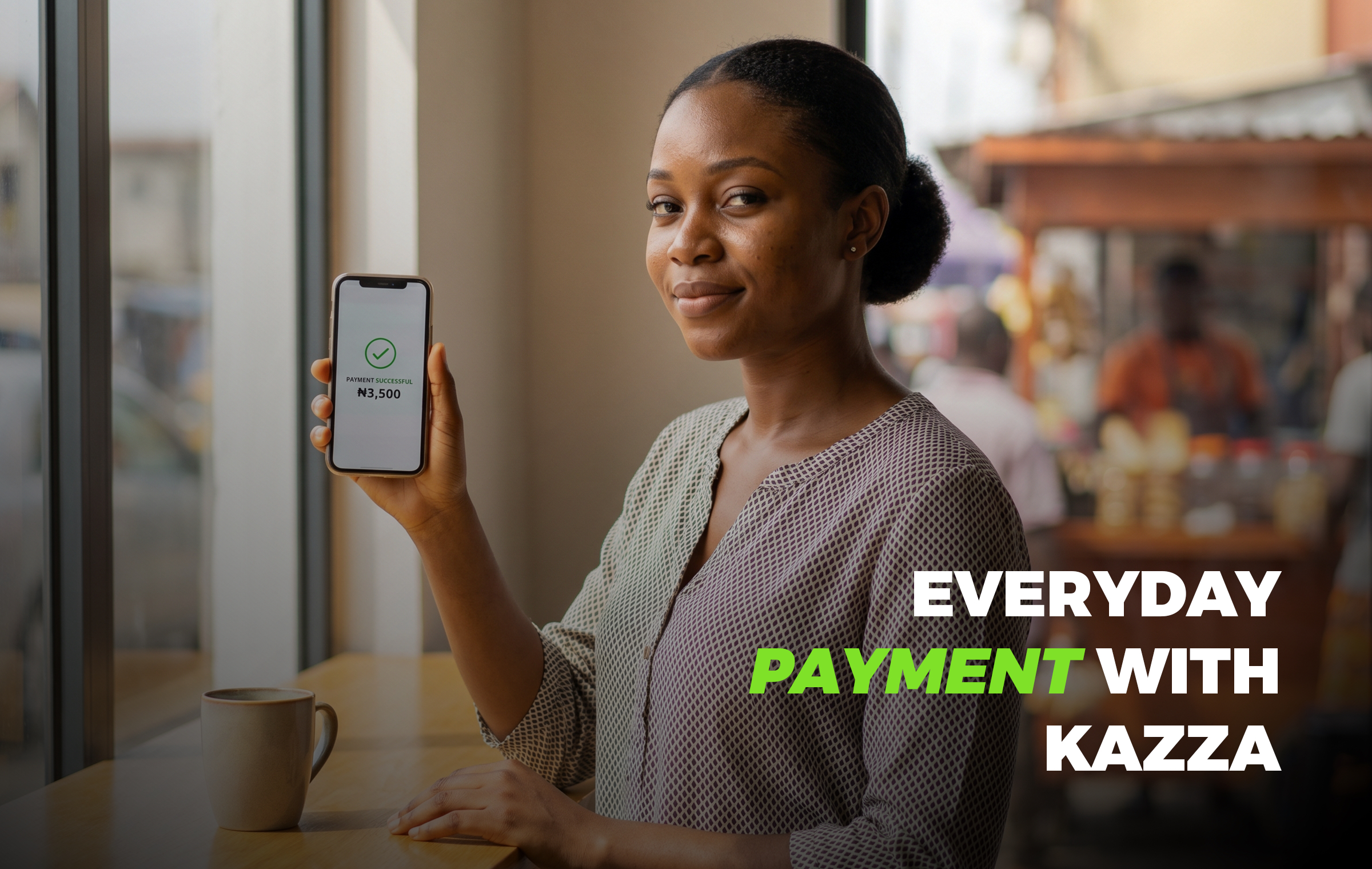
One evening after classes, Amara and her friends stopped at a small burger spot near campus. Everyone was ordering food after a long day, and when it was time to pay, she realized she didn’t have cash on her. Normally, that would mean asking someone to transfer first, waiting for failed bank network retries, or trying to find the nearest ATM. But this time, she simply paid from her phone using Kazza. “No stress,” she said. “That’s honestly what I liked most.”
What Stories Like Amara’s Really Show
That moment may sound simple, but it reflects something bigger happening across emerging markets. Digital assets are becoming more practical for everyday people. Not everyone using stablecoins is trying to trade charts all day. Sometimes it’s students receiving support from family abroad. Sometimes it’s freelancers getting paid remotely. Sometimes it’s small business owners trying to move money more easily. The important thing is being able to actually use that money in real life — to buy food, to pay bills, to handle everyday responsibilities without friction.
And honestly, that’s what stood out to Amara about the experience. “It didn’t feel complicated,” she told us. “It just worked.” As digital finance continues evolving, experiences like this are becoming increasingly important. Because the future of money isn’t only about technology. It’s about making everyday life easier for real people.
At Kazza, we’re excited to keep building for stories like Amara’s — stories that often go unnoticed, but represent how digital finance is quietly becoming part of everyday life across emerging markets. And this is only the beginning. Follow our journey as we continue exploring how people are using digital assets in practical, everyday ways across Africa and beyond.